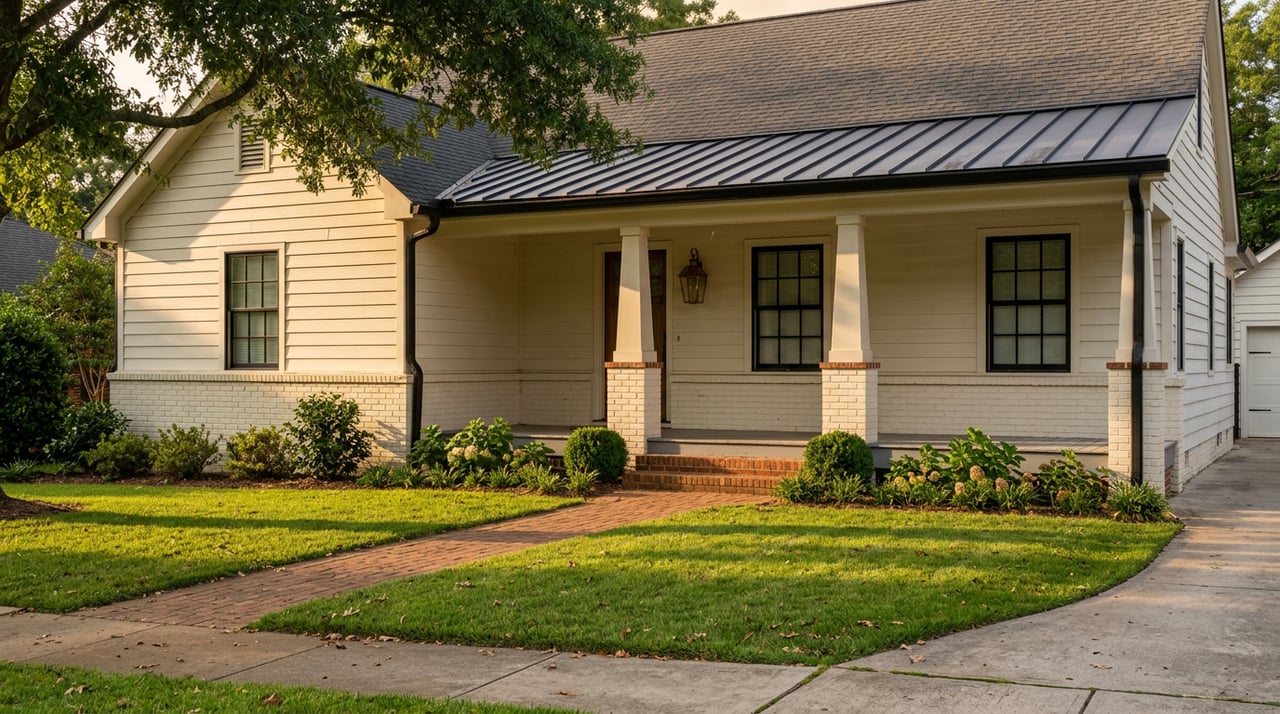
What's Really Behind Holly Springs Home Prices?
August 20, 2026
August 20, 2026
Ask four different websites what a home costs in Holly Springs right now and you will get four different answers. In June 2026, Zillow put the typical home value at $547,566, down 3.3 percent from the year before. Realtor.com's May 2026 figures showed a median listing price of $651,300, with homes moving in 26 days. Redfin's May numbers landed at $621,628, with the average home selling about 1 percent below list and going pending in roughly 18 days. Movoto's August snapshot put the median list price at $699,000. Same town, same rough window of time, four numbers that do not sit anywhere near each other.
The easy explanation is methodology. Zillow tracks estimated values across the entire housing stock, not just what is actively for sale. Redfin and Realtor.com pull from different slices of listed and closed sales. That is true, and it is also not the part that matters if you are actually trying to buy here. The part that matters is what happens when you stop asking what Holly Springs costs and start asking which Holly Springs you mean.
Holly Springs is not one housing market wearing a single median. It is at least two, stitched together under one zip code. May 2026 neighborhood-level data made that split obvious.
| Neighborhood | Median list price | Median days on market |
|---|---|---|
| Twelve Oaks | $887,000 | 20 |
| Sunset Ridge | $775,000 | 17 |
| Holly Glen | $535,000 | 38 |
| Woodcreek | $492,500 | 40 |
Twelve Oaks and Sunset Ridge, both built around golf course amenities and established clubhouses, sit roughly $300,000 to $400,000 above Holly Glen and Woodcreek. That gap alone would explain why every portal's citywide median tells a different story depending on which listings happened to close that week.
But look at the days-on-market column again. The cheaper neighborhoods are not selling faster. They are selling slower, by a wide margin. Woodcreek homes take twice as long to go under contract as homes in Twelve Oaks, despite costing nearly $400,000 less. That is backwards from how most housing markets behave, where higher price usually means a smaller buyer pool and a longer wait. In Holly Springs right now, the smaller, less expensive homes are the ones sitting.
That single reversal is the tell. It says buyer demand this year is concentrated among people with equity to move up, not among first-time buyers stretching for entry-level product. Move-up buyers with a prior home to sell are absorbing the golf course inventory quickly. Buyers who need the $500,000 range to actually be affordable are running into financing friction that shows up as slower absorption, even at a lower price point.
Here is where the story stops being about buyer behavior and starts being about supply, and this is the part that does not show up on Zillow, Redfin, or Realtor.com at all.
The Town of Holly Springs' own FY27 budget message, released in May 2026, reports that single-family and townhome permits fell to under 300 in 2025. The town's 10-year average is 600. Permitting cut nearly in half in a single year. At the same time, the same budget documents roughly 5,200 residential units that have already been approved by the town but have not broken ground.
Read those two facts side by side and the picture changes. Holly Springs is not running out of approved land. It has thousands of entitled lots sitting idle. What changed is the rate at which builders are choosing to pull permits and start construction on land they already have the right to build on. Holly Springs Update's coverage of the proposed $139.2 million FY27 budget frames it plainly: the town is managing two realities at once, still absorbing the traffic and infrastructure strain from a decade of rapid growth, while new residential permitting has slowed considerably. The town itself points to higher interest rates and national market conditions rather than any local shortage as the reason.
That distinction matters enormously for anyone trying to time a purchase. A market that is short on approved land behaves one way: prices climb because supply genuinely cannot catch up. A market sitting on 5,200 approved, unbuilt units behaves differently. It means supply exists. It is being metered.
The reason to meter rather than release comes down to where new construction is actually pricing right now. As of May 2026, new construction sales in Holly Springs carried a median price of $804,508 across roughly 48 new homes from eight builders, including Lennar, Taylor Morrison, Davidson Homes, Homes by Dickerson, and Prewitt Custom Homes. Active builder communities across the town span a price range from about $569,995 to $1,599,000, spread across at least seven builders working in nine or more communities.
That new-construction median sits well above every citywide resale figure quoted at the top of this piece, and it sits closer to the Twelve Oaks and Sunset Ridge end of the table than to Woodcreek or Holly Glen. Builders holding entitled land are not releasing it to compete in the entry tier where days-on-market are already stretching toward 40. They are pacing new product toward the tier where absorption is fastest and margin protection is easiest.
That is the mechanism behind the conflicting medians. It is not four websites disagreeing about math. It is a town where the fast-moving, higher-priced segment is getting the bulk of active attention from both buyers and builders, while the segment that would actually relieve affordability pressure sits with a deep bench of approved supply that nobody is in a hurry to build.
The town's broader tax base tells a consistent story too. Property values across Holly Springs have grown by more than 7 percent a year on average since 2020, even as permit counts fell. Growth has not stopped. It has shifted from raw building activity to appreciation on what is already built, which is exactly what you would expect if builders are choosing patience over volume.
If you are cross-shopping neighborhoods rather than just checking a citywide number, the 5,200-unit backlog changes how you should read each tier:
Will the 5,200 approved-but-unbuilt homes eventually flood the market and drop prices? Nothing in current data suggests an imminent release. The town's own budget language points to interest rates and national conditions, not local policy, as the reason permits slowed. Builders are choosing pace, and that can persist for years if financing conditions do not shift.
Why is the cheaper end of the market sitting longer than the expensive end? The days-on-market gap points to where real buying power is concentrated right now. Move-up buyers with equity from a prior sale are moving quickly through the golf course communities. Buyers who need the mid-$400,000s to mid-$500,000s to work financially are facing more friction, which shows up as longer time on market rather than falling prices.
Comparing Holly Springs against another Triangle suburb, or trying to decide whether Twelve Oaks, Sunset Ridge, Holly Glen, or Woodcreek fits your search, is exactly the kind of decision that benefits from someone who tracks this data by neighborhood rather than by citywide average. That is what our team at Sold By Starkey does every week for buyers moving through Wake County. If you want a straight read on what a specific Holly Springs neighborhood is actually doing right now, not what four different websites average it out to, reach out and start with a free home value conversation.
Stay up to date on the latest real estate trends.


The Sold by Starkey team knows how to navigate the Triangle area real estate market like no other. We have firsthand, local expertise on how and where to find the best available homes—which may be why our listings only spend an average of nine days on the market, a statistic well below the Triangle average.