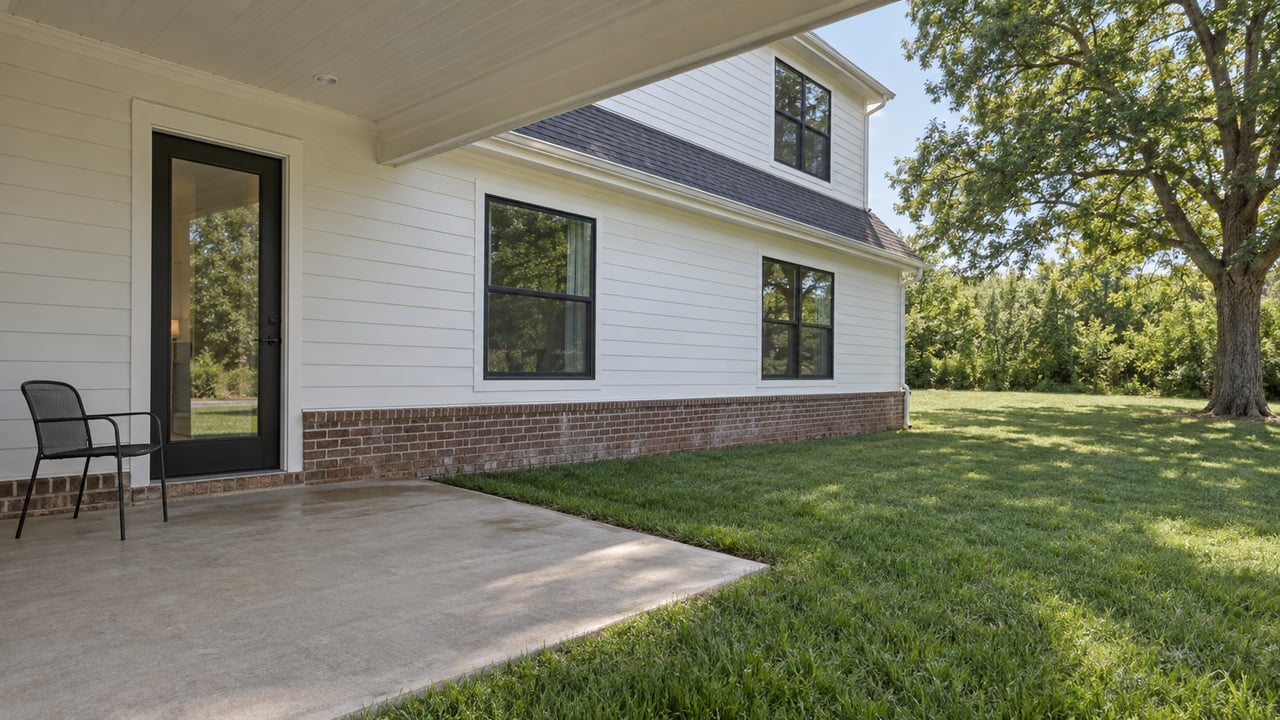
Sewer Is Coming To Fuquay-Varina. Just Maybe Not To Your Street.
October 1, 2026
October 1, 2026
When will public sewer reach a particular street in Fuquay-Varina? On a well-and-septic listing, "soon, this whole area's growing" is an easy assumption to make. It's also not an answer the Town itself can give you, and the Town has said so in writing.
In 2025, the Fuquay-Varina Town Board adopted a wastewater asset management plan after an eighteen-month study funded by a $400,000 American Rescue Plan grant. Public Utilities Director Mike Wagner and consultant Nina Garraway of Withers Ravenel presented the findings. About 4.6 to 5 percent of the town's gravity sewer assets are in poor condition. More than 10 miles of pipe were flagged for strategic attention. And, as Garraway told the board, "5 of your now 30 plus lift stations have exceeded their life expectancy."
That's the state of the sewer system that already exists inside town limits. It says nothing about when, or whether, it reaches a specific septic property outside those limits. During the same meeting, board members put the harder truth on the record: converting a septic system to sewer requires both annexation and the property owner's willingness to pursue it, and the full buildout could take decades and might exceed what the town can actually fund.
That's the detail worth sitting with if you're evaluating a Fuquay-Varina home on well and septic. The timeline isn't a countdown. It's contingent on two things that a listing sheet can't tell you and a drive-by can't confirm.
Fuquay-Varina's own annexation process page states it plainly: annexation is initiated solely at the request of the property owner. It doesn't happen automatically because a subdivision fills in around a parcel, and it doesn't happen because a town's corporate limits creep closer on a map. Someone has to petition for it, and the town requires a pre-submittal meeting before that petition even gets filed. Once submitted, it goes through two separate board meetings: a Certification Hearing, typically the third Tuesday of the month, and a Public Hearing the following month. Properties must actually sit inside the corporate limits before they can connect to public water or sewer at all.
A market-tracking service that monitors the town's development pipeline describes the wastewater plan in broader terms: a fifty-year effort to consolidate more than thirty pump stations into seven regional gravity stations. Whether the number lands at exactly fifty years or not, the shape of the plan is the same as what the board said out loud. This is generational infrastructure work, financed one budget cycle at a time, not a project with a fixed delivery date attached to your address.
The town's recent board minutes show what this looks like in practice, and it's more piecemeal than most buyers picture.
In February 2026, commissioners approved a rezoning for roughly 8.5 acres at 5800 Johnson Pond Road, clearing the way for a small subdivision called Woodcrest. The site sits in the town's extraterritorial jurisdiction, water service was already available, and the developer agreed to extend sewer as part of the project, contingent on annexation. That annexation was adopted a few months later, in May 2026, as a separate ordinance. Two board actions, months apart, for one parcel.
In August 2025, the board adopted annexation ordinances for six parcels in a single meeting, including a 10-acre site tied to Stevens Road Partners. That one drew the most public comment. Several nearby residents said their properties back up to wetlands and sit on flood-hazard soils. One put it directly at the meeting: "I bought my house just over a year and a half ago… I didn't know I had a swamp." The hearing that night was limited to whether the town could provide utility service at all. Zoning, density, and stormwater design were pushed to separate hearings later.
The same public record shows something else worth knowing if you're on well water in an area the town is actively developing: when private wells are rendered unusable by nearby roadway construction, the town has granted emergency water agreements to serve those properties before annexation is even finalized. That's a workaround, not a policy, and it exists precisely because the formal process moves slower than the disruption on the ground.
None of this tracks tidily with how close a lot sits to the town line. It tracks with whether a specific owner, or a developer holding an option on that owner's land, decided to start the paperwork.
If the home you're evaluating is staying on septic for the foreseeable future, and for many Fuquay-Varina properties that's the realistic case, North Carolina has specific documentation that determines whether the sale goes smoothly.
A septic system in this state moves through three permits: an Improvement Permit confirming the soil and site were approved, a Construction Authorization describing how the system was built, and an Operation Permit issued after installation and final sign-off. That Operation Permit lists the number of bedrooms the system was sized for. North Carolina brokers are required to verify that a home's actual bedroom count matches what's on that permit and to include a copy of it in the MLS listing. If someone converted a home office into a fourth bedroom years ago but the septic system was only ever permitted for three, that mismatch surfaces here, and it needs to be resolved before closing, not after.
State law doesn't mandate a septic inspection at the time of sale. In practice, most lenders require one anyway, particularly on FHA and VA loans. Since 2008, only inspectors certified through the NC On-Site Wastewater Contractors and Inspectors Certification Board can legally perform that point-of-sale inspection. A general home inspector or the person who pumps your tank isn't qualified to sign off on it.
Loan type changes how strictly a well-and-septic property gets scrutinized, and it's worth knowing before you fall for a house.
FHA guidelines call for specific separation distances: a well at least 10 feet from the property line, 50 feet from the septic tank, and 100 feet from the drain field, with some exceptions allowed down to 75 feet where local code permits it. Plenty of older lots in areas that predate current code were platted tighter than that. Conventional loans through Fannie Mae or Freddie Mac are more forgiving. They typically don't require a separate well or septic inspection unless the appraiser or another party to the transaction flags a visible problem. FHA, VA, and USDA loans are stricter across the board and generally require water quality testing regardless of what the property looks like on the surface.
Here's the detail most buyers don't expect. Even after public sewer eventually reaches a street, a homeowner isn't automatically forced to hook up in order to keep qualifying for FHA financing. One FHA-focused mortgage resource notes that underwriters generally only push for the connection if the cost is a small fraction of the home's value, often cited around 3 percent. A private well and septic system that's functioning and meets the distance requirements can remain exactly that, indefinitely, even in a neighborhood where sewer arrives next door.
That's the piece that reframes the whole question. Sewer reaching a subdivision doesn't automatically retire a working septic system on the lot next to it. The system, the permit, and the financing rules travel with the parcel, not with the town's infrastructure map.
If you're looking at a Fuquay-Varina property on well and septic, the useful questions aren't about the town's general growth trajectory. They're about this specific parcel: Is it inside the corporate limits or the ETJ? Has an annexation petition ever been filed for it, and if so, what happened? Is there an active Operation Permit on file, and does the bedroom count on it match the house as it exists today? If you're financing with FHA, VA, or USDA, has anyone measured the actual distances between the well, the tank, and the drain field?
Wake County's Environmental Health Department, not the town, handles well and septic approvals for properties outside Fuquay-Varina's corporate limits, and the town's own FAQ confirms that anyone on a private system needs county sign-off before certain permits can even be submitted. Two agencies hold two sets of records, and neither one publishes a sewer date for an individual address.
If you're weighing a Fuquay-Varina home on well and septic, Sold By Starkey can help you pull the parcel's annexation history and permit records before you write an offer, so the septic question gets answered with documents instead of guesses.
Stay up to date on the latest real estate trends.


The Sold by Starkey team knows how to navigate the Triangle area real estate market like no other. We have firsthand, local expertise on how and where to find the best available homes—which may be why our listings only spend an average of nine days on the market, a statistic well below the Triangle average.