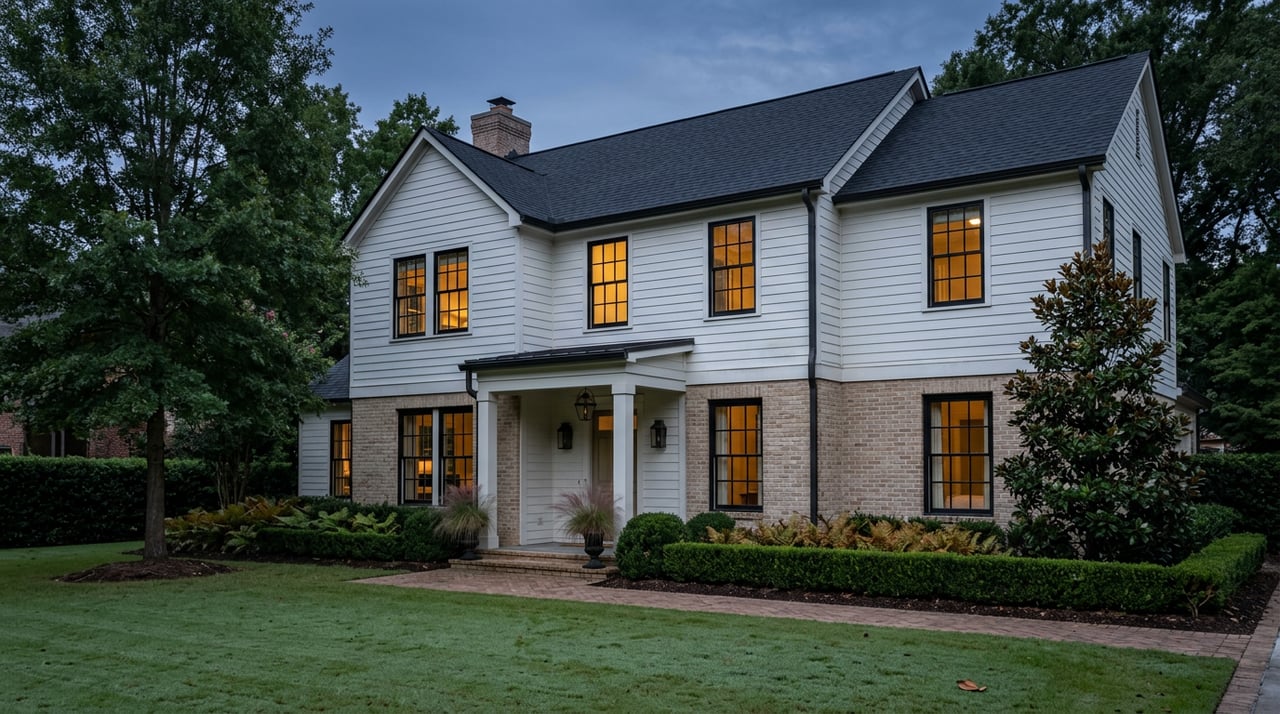
Comparing Cary Neighborhood Home Prices and HOA Fees
September 17, 2026
September 17, 2026
Pull up two Cary listings this month, priced within a hundred thousand dollars of each other, and you'll likely see the same number sitting in the HOA field: somewhere between $150 and $200 a month. One home sits in Amberly. One sits in Preston. On paper, the fee looks identical. In practice, one of those fees is a season pass to a resort clubhouse with a heated pool, a 3,500-square-foot fitness center, and lit tennis and pickleball courts. The other is closer to street maintenance and mulch. The golf course, the tennis courts, the amenities that make a Preston listing photograph so well, live behind a separate line item that never shows up on the HOA disclosure at all: an optional country club membership running several hundred dollars a month, billed by a completely different organization.
That gap is the thing worth understanding before you compare two Cary neighborhoods by their monthly dues. The number is the same. The product behind it is not.
Amberly, the roughly 1,100-acre master-planned community in west Cary that got its start in 1995, was built around the idea that residents could live, work, shop, and play without leaving the neighborhood. Its HOA runs about $175 to $225 a month, and that fee is what pays for the amenity center: the resort-style pool, the fitness center, tennis and pickleball courts, a playground, and a community gathering room, on top of landscaping for the shared spaces. Whether you use the pool every weekend or never once, you're already paying for it. The fee is the amenity.
Preston works differently. Cary's most prestigious address, developed after SAS bought the land in 1991, keeps its HOA in a similar range, roughly $150 to $200 a month, but that money covers common-area landscaping, entrance maintenance, and neighborhood events. Golf, tennis, and pool access all live at Prestonwood Country Club, a separate membership that costs around $350 a month for a family golf package. You can own a $900,000 home in Preston and never set foot on the course unless you write that second check.
MacGregor Downs, the country club community built around Lake MacGregor starting in the 1960s, pushes the split even further. Its HOA is the lowest of the three, typically $100 to $160 a month, covering common areas and entrance upkeep. The golf course threads directly through the neighborhood, so every homeowner gets the view and the park-like feel for free. Playing the course, or using the pool and tennis courts, requires membership at MacGregor Downs Country Club, which counts roughly 650 members. The view is bundled into the address. The game is not.
Here's what that looks like side by side:
| Neighborhood | Typical monthly HOA | What the HOA fee covers | Club or golf access |
|---|---|---|---|
| Amberly | $175–$225 | Pool, fitness center, tennis, pickleball, clubhouse, shared landscaping | Included in HOA dues |
| Preston | $150–$200 | Common-area landscaping, entrance upkeep, neighborhood events | Separate Prestonwood Country Club membership, about $350/month for family golf |
| MacGregor Downs | $100–$160 | Common areas, entrance maintenance, neighborhood events | Separate MacGregor Downs Country Club membership (roughly 650 members); the golf-course view is free, playing it is not |
A buyer scanning HOA fields alone would rank these three neighborhoods from most to least expensive in exactly the wrong order.
For a realistic monthly budget, add any club dues you would actually choose to pay; the HOA alone won't capture that amount.
Cary's citywide figures are sending a mixed signal, in part because these neighborhoods package amenities differently. A market update covering homes that closed in August 2026, pulled from Doorify MLS records, put Cary's median sales price at $627,500, up 7.5% year over year, with 162 closed sales and median days on market down to 19. In the same report, though, the median sold price per square foot fell about 1.2% over that same period. A separate reading of the three months ending June 2026 showed a median sale price of $645,000, down slightly year over year, with price per square foot down roughly 1.1%.
A median that rises while price per square foot falls usually means the mix of what's selling changed, not that every home in town got more valuable at once. More of the closings likely skewed toward larger homes, which in Cary tends to mean the newer, bigger-footprint product in bundled-amenity communities like Amberly or the western Cary corridor, pulling the median up even as per-square-foot pricing in the broader market cooled. Neither the 7.5% headline nor the flat-to-soft price-per-square-foot story describes any one neighborhood. Both describe a blend of very different products closing in the same window. Readers who want to look at Cary's real estate trends over time on their own can find the town's open data portal, which tracks the raw figures behind these reports.
Before you compare two Cary HOA numbers as if they're the same line item, it helps to ask a short list of questions:
If you're listing a home in a bundled-amenity neighborhood and a buyer is cross-shopping it against a club-optional listing with a similar HOA fee, that buyer needs to understand what each number actually includes before they can compare offers fairly. The reverse is just as true for sellers in Preston or MacGregor Downs, where a buyer unfamiliar with the optional-club model might assume the modest HOA fee means a lower total cost of ownership than it does. Spelling out the amenity model clearly in the listing, rather than leaving a buyer to discover it during due diligence, tends to shorten the gap between an offer and a closing.
Does a lower HOA fee mean a better deal? Not by itself. A lower fee in a club-optional neighborhood like MacGregor Downs or Preston can come with hundreds of dollars a month in separate membership costs if you want the amenities. A higher fee in a bundled community like Amberly may already include everything those dues would otherwise cost extra.
Is club membership open to anyone who buys in the neighborhood? Membership terms are set by each club, not by the HOA, so it's worth confirming directly with the club rather than assuming the HOA paperwork covers it. Waitlists and membership categories can vary from one club to the next.
How do I find out which model a specific neighborhood uses before I write an offer? Ask for the HOA's CC&Rs and financials during due diligence, and call the club separately to ask about membership costs and availability. The two documents often don't reference each other at all, since the club is frequently its own legal entity.
Comparing Cary neighborhoods by HOA fee alone is a little like comparing two restaurants by their cover charge. The number on the door doesn't tell you what's on the menu. If you're weighing a move between Preston, Amberly, MacGregor Downs, or anywhere else in Cary and want someone to walk through what a specific HOA fee actually buys before you write an offer, Sold By Starkey knows these neighborhoods block by block and can help you sort out the real cost of the lifestyle you're picturing.
This article is general information, not legal, tax or financial advice. Consult a qualified professional about your situation.
Stay up to date on the latest real estate trends.


The Sold by Starkey team knows how to navigate the Triangle area real estate market like no other. We have firsthand, local expertise on how and where to find the best available homes—which may be why our listings only spend an average of nine days on the market, a statistic well below the Triangle average.