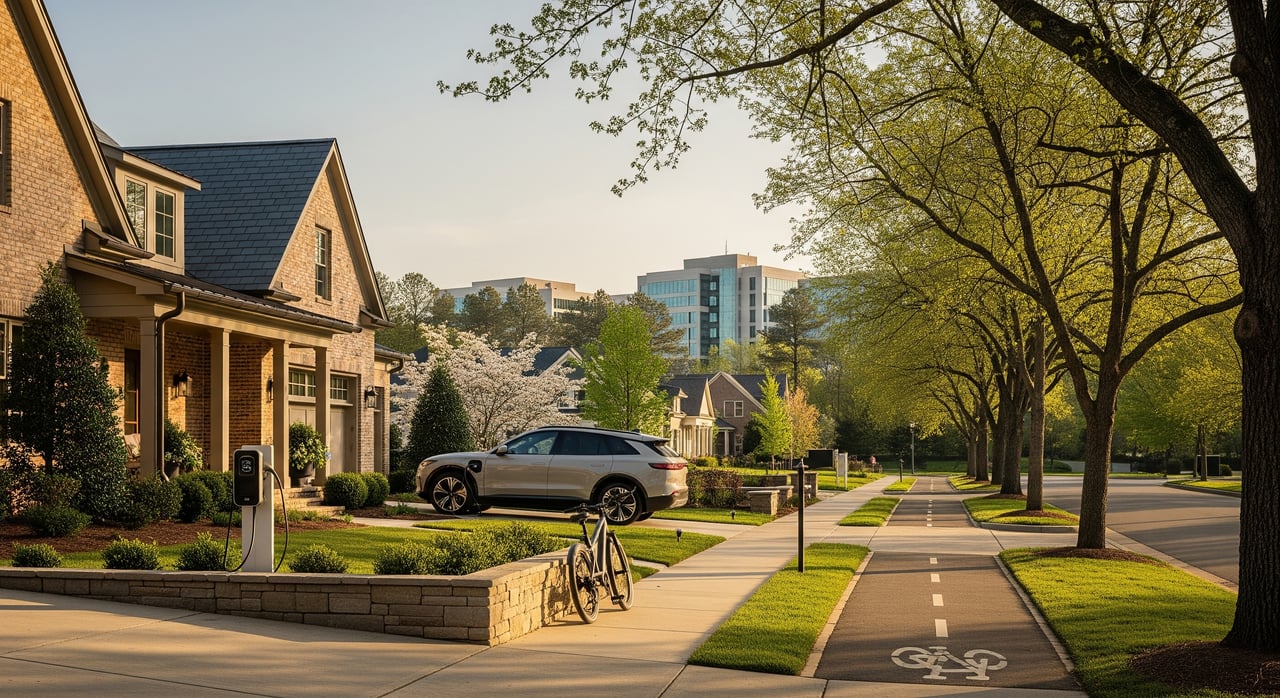
Cary Commute to RTP: Neighborhoods & Routes
December 4, 2025
December 4, 2025
Thinking about living in Cary while working in Research Triangle Park? You are not alone. Many professionals choose Cary for its neighborhoods, parks, and quick access to RTP. In this guide, you will learn realistic drive times, the best routes, transit and biking options, and which Cary areas make the commute easier. Let’s dive in.
RTP is large and spread out, so your exact workplace address matters. From many Cary neighborhoods, off-peak drives to central RTP can take about 10 to 25 minutes. During weekday rush hours, plan for 20 to 45 minutes or more depending on your route and traffic. Town-level data shows Cary’s median commute time sits in the mid-20 minute range.
Traffic can vary with crashes, construction, and special events. Many RTP employers now use hybrid schedules, which can reduce peak congestion some days, but I-40 still sees heavy volumes at rush hour. Always check live maps for your typical departure time before you decide on a neighborhood.
I-40 is the main link most Cary commuters use to reach RTP. It offers direct access to the park’s central and western campuses and connects to key interchanges inside RTP. Expect this segment to be the biggest swing factor for travel time during peak periods.
NC-54 (and nearby connectors) serve commuters from west and central Cary, and from the Apex and Morrisville direction. These routes feed RTP access points and can be good alternates to I-40 depending on your origin and destination.
Local arterials like Cary Parkway, Kildaire Farm Road, Harrison Avenue, and Chapel Hill Road often handle the first and last miles of your trip. Knowing two or three ways to reach your RTP entrance can save time when incidents occur.
Public transit and employer programs can simplify the commute if the schedules match your needs. Routes, stops, and fares change over time, so verify details on operator sites before you move.
Many large RTP employers run private shuttles from designated lots or nearby neighborhoods. Regional ridematching and vanpool programs are common and often subsidized, which can be cost effective for longer commutes. Check your employer’s commuter resources for shuttle maps, eligibility, and parking guidance.
Park-and-ride lots around the region serve RTP express routes. Lots and services can shift with demand, so confirm current locations, capacity, and timetables before relying on a particular lot.
Cary maintains an extensive greenway network that links neighborhoods, parks, and key corridors. If you live near RTP’s edge or close to a greenway connection, a bike or e-bike commute can be realistic.
Every section below names general areas and commonly known communities as examples. The best fit depends on your exact RTP address and commute tolerance.
Use this simple process to compare homes and routes with confidence.
Pinpoint your exact RTP address
RTP covers miles and multiple campuses. The building address determines the best neighborhood and route.
Set a maximum door-to-door time
Choose your tolerance, such as 20, 30, or 40 minutes. This will focus your home search on realistic areas.
Test drive times for real departures
Check morning and evening travel at several departure times. Save two route options for each home you tour.
Verify transit and park-and-ride options
Use operator trip planners to confirm current routes, stops, and fares. If your employer offers shuttles or vanpools, check eligibility and schedules.
Evaluate bike or e-bike feasibility
Review Town of Cary greenway maps and signed bike routes. If possible, ride a test loop at your typical commute hour.
Confirm parking details
Policies vary by employer and RTP campus. Ask HR or the parking office about costs, permits, and availability.
Tour neighborhoods with your routes in mind
Visit at commute times and note greenway and transit access. Compare how each location handles your daily schedule.
You can balance Cary’s neighborhood lifestyle with a practical RTP commute. If you want neighborhood-by-neighborhood drive-time estimates, a list of transit and park-and-ride options near your short list, or help testing a bike route, our team is here to guide you. Reach out to Amanda Starkey for local expertise and a smooth relocation experience.
Ready to explore Cary with commute clarity? Connect with Amanda Starkey for a tailored plan and on-the-ground neighborhood guidance.
Stay up to date on the latest real estate trends.




The Sold by Starkey team knows how to navigate the Triangle area real estate market like no other. We have firsthand, local expertise on how and where to find the best available homes—which may be why our listings only spend an average of nine days on the market, a statistic well below the Triangle average.