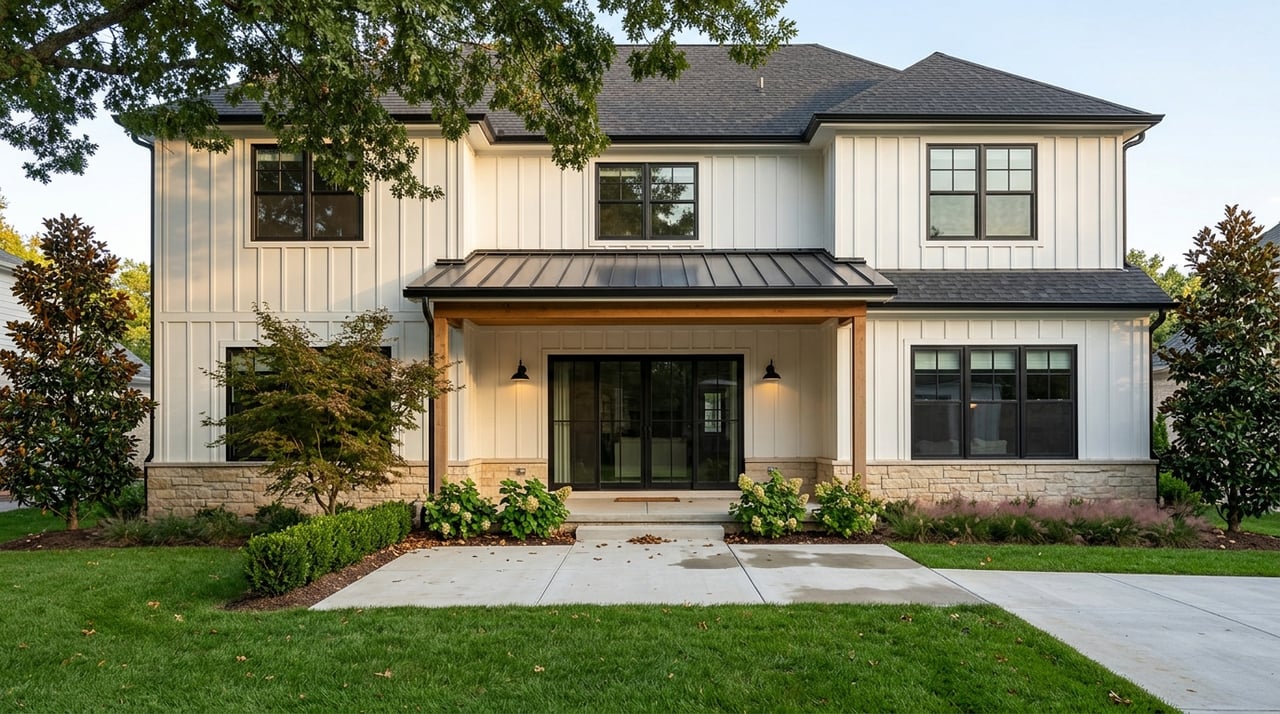
How to Choose the Right Area for Move Up Homes in Cary
June 18, 2026
June 18, 2026
Wondering where to move up in Cary when almost every option seems to come with a trade-off? That is a common challenge here, especially in a town where demand is high, developable land is limited, and neighborhood choices can feel very different from one part of Cary to another. If you are trying to balance commute, home size, condition, lifestyle, and monthly cost, this guide will help you build a smarter shortlist. Let’s dive in.
Cary is not a market with endless room for easy new construction. The Town of Cary reports a population of about 192,000, a median household income of $135,132, a median home value of $649,000, and less than 14% of developable land remaining.
That matters because move-up buyers are often choosing between very different paths. You may be comparing an older home in a more central location, an established neighborhood with strong recreation access, or a newer planned area with more uniform finishes and amenities.
Cary’s housing stock also shapes the decision. The town says 73% of housing is single-family, 27% is multi-unit, and more than half of all housing units were built before 2000, with older housing concentrated closer to the core.
Before you compare neighborhoods, get clear on what “move-up” means for you. For one buyer, it means more bedrooms and a larger yard. For another, it means a better commute, newer systems, or easier access to parks, greenways, and daily errands.
A helpful way to narrow your search is to rank your top priorities from most important to least important. In Cary, the big categories usually include:
If you know which two or three matter most, your shortlist becomes much easier to build.
This category usually appeals to buyers who want a more central location and an established feel. These areas often offer mature landscaping, easier access to downtown Cary, and stronger day-to-day convenience.
Downtown Cary Park is a major lifestyle draw in the town core. It is a seven-acre park with play structures, public art, a dog park, and event space, and Higgins Greenway helps connect downtown to places like Cary Arts Center and Cary Regional Library.
The trade-off is usually the home itself. Older, closer-in homes may have less updated finishes, older systems, or renovation needs, even when the location is excellent.
MacGregor Downs is one example of Cary’s older housing pattern, with development dating back to the 1960s. For some move-up buyers, that older stock creates opportunity if you are comfortable taking on updates in exchange for a strong location.
Some buyers want an established neighborhood without giving up recreation access and neighborhood character. This is where communities like Preston and Lochmere often enter the conversation.
In Preston, the Preston Village Greenway connects Green Hope Elementary School Park, Cary Tennis Park, and Green Hope High School. The town has also documented infrastructure work in Preston, which is a reminder that established neighborhoods can offer strong location and amenities while still requiring buyers to pay attention to age and upkeep.
In Lochmere, town projects highlight the Lochmere Drive Bridge as an important connector near the lake spillway and Lake Park boat ramp. A separate sidewalk project also notes a connection from Lochmere to commercial centers on Tryon Road and Kids Together Park.
For move-up buyers, these neighborhoods can offer a middle ground. You may get more space or a more established setting while staying in Cary, but you still need to evaluate maintenance history and possible updates.
If you want newer infrastructure, more consistent finishes, or a stronger amenity package, newer planned communities may fit better. In Cary, that conversation often includes master-planned and mixed-use areas rather than just a typical subdivision model.
The town’s zoning framework names districts such as Amberly, Alston, Cary Park, Carpenter Village, Westpark, Preston, and MacGregor. The Fenton project is another major example, with the town describing it as a 92-acre mixed-use development in Eastern Cary that includes office, retail, residential, and hotel uses.
This category often works well for buyers who want a more predictable ownership experience. The trade-off is that HOA dues, community rules, and lot-size differences can become a bigger part of the budget and lifestyle decision.
One of the most overlooked parts of choosing a Cary neighborhood is the county line. Cary spans Wake, Chatham, and Durham counties, and that changes your tax bill even when two homes feel similar on the surface.
The town began FY 2026 with a municipal property tax rate of 34 cents per $100 of assessed value. For 2025-26 county rates, Wake is 0.5171 per $100, Chatham is 0.6000, and Durham is 0.5542.
That puts the combined town-plus-county rate at about:
Another way to look at it is by every additional $100,000 of assessed value. That works out to roughly:
For move-up buyers stretching into a higher price point, that difference matters. It is one reason your decision should be based on monthly carrying cost, not just purchase price.
Cary is an affluent market, but monthly affordability is still a real issue. The town’s Consolidated Plan says 21% of residents are housing cost-burdened.
That does not mean a move-up purchase is out of reach. It does mean that your best choice may not be the home with the biggest footprint or the newest finishes if that decision creates pressure in your monthly budget.
When you compare neighborhoods, look at the full picture:
A slightly older home in a more convenient location may save time and money in ways that matter to your daily life. A newer home may reduce near-term maintenance, but higher dues or a longer drive could change the equation.
Neighborhood selection in Cary is often a commute decision first. The town is adjacent to Raleigh and Raleigh-Durham International Airport, has Amtrak service at Cary Depot, and sits within about 20 miles of both downtown Durham and Chapel Hill.
Cary also offers GoCary transit and is planning a multi-modal center to support local and regional buses, bus rapid transit, future commuter rail, and Amtrak. For many households, that broad access is a big reason to stay in Cary while moving up.
The town’s 2025-2030 housing plan says 74% of Cary workers had one-way commutes under 30 minutes, while 23% were between 30 and 59 minutes. That tells you something important: small location shifts inside Cary can still make a meaningful difference in your daily routine.
If you want an active lifestyle, neighborhood access to trails and parks can be as important as the home itself. Cary says it now has more than 100 miles of greenways, more than 492 miles of sidewalks, and 30 parks and natural areas.
The town describes greenways as connectors between neighborhoods, parks, schools, retail areas, and employment centers. That means two homes with similar square footage can feel very different in daily life depending on how easily you can walk, bike, or reach outdoor space.
For many move-up buyers, this is where the tie gets broken. If one neighborhood gives you easier access to trails, parks, and connected sidewalks, it may deliver more value to your routine than a few extra interior upgrades.
If school assignment is part of your search, be careful about relying on a neighborhood name alone. Wake County Public School System says every family is assigned to a base school based on the home address, and a move within Wake County can change the assigned base school.
That is why school planning should happen at the exact-address stage, not just when you are browsing community names online. The details can shift based on address and school year, so this should be verified as part of your home search process.
Using neutral, address-based verification helps you make a cleaner decision. It also keeps your search focused on confirmed facts instead of assumptions.
It is tempting to use one median price as a shortcut for the whole market, but Cary is too varied for that. Current snapshots differ by source, with one reporting a median sale price of $600,000 and another reporting a median listing price of $575,000, 646 homes for sale, and a typical 44 days on market.
The takeaway is simple. A townwide number is not a neighborhood comp.
When choosing your move-up neighborhood, sold data at the address level matters more than a broad city average. That is especially true when you are comparing older homes with renovation upside against newer homes with more planned amenities.
If you want a practical way to decide, use this three-part filter.
Choose the feature that matters most in daily life. That may be a shorter commute, better greenway access, a newer home, or a more central Cary location.
Decide what monthly payment feels comfortable after taxes, dues, insurance, and upkeep. This keeps you from over-focusing on list price while underestimating the real cost of ownership.
Once your priorities are clear, the right category often stands out:
In a market like Cary, there is rarely one perfect answer. The best neighborhood is usually the one whose trade-offs fit your life most naturally.
If you want help narrowing your options in Cary, Sold By Starkey can help you compare neighborhoods, carrying costs, and address-level factors so you can move up with confidence.
Stay up to date on the latest real estate trends.
The Sold by Starkey team knows how to navigate the Triangle area real estate market like no other. We have firsthand, local expertise on how and where to find the best available homes—which may be why our listings only spend an average of nine days on the market, a statistic well below the Triangle average.